Clear visibility fast with mobile fleet scheduling, OEM equivalent glass, precise fitment, and written pricing.
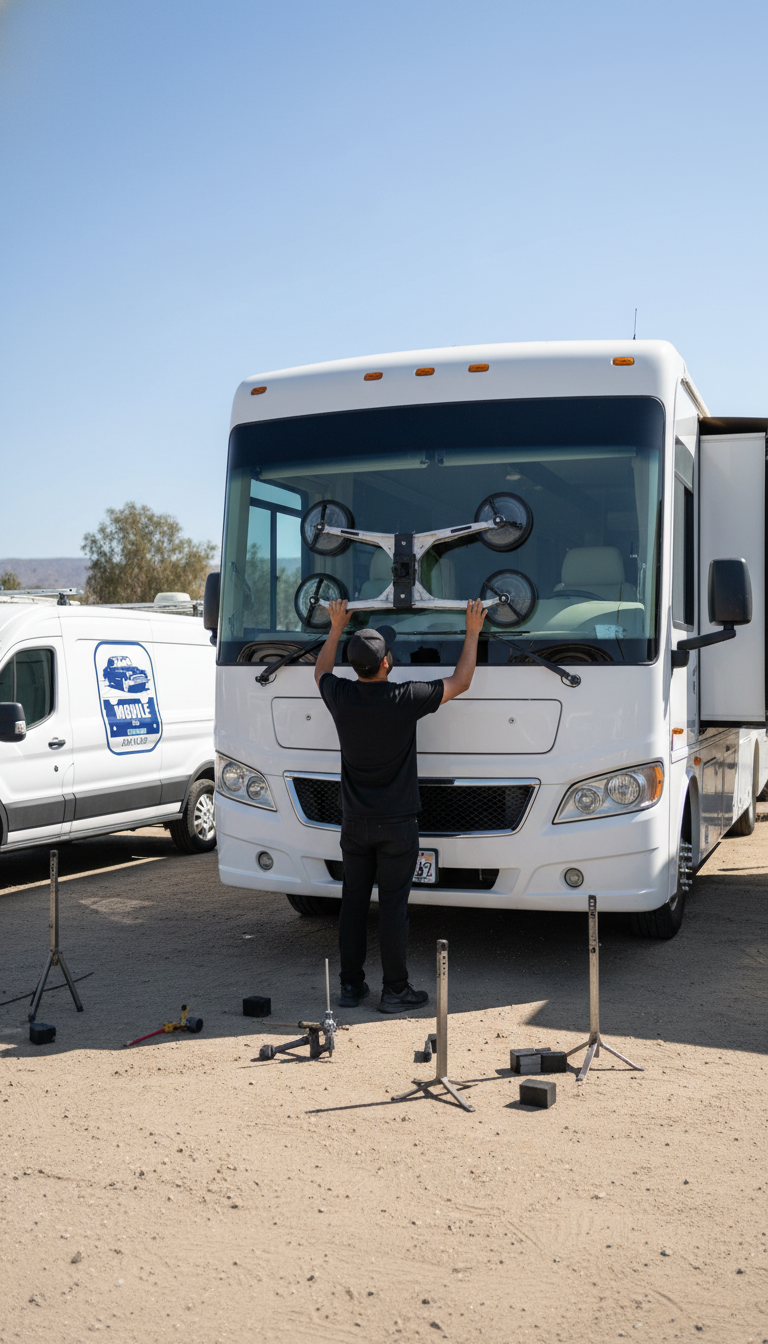
Commercial auto glass repair and replacement address laminated safety glass damage based on severity, location, and safety criteria, with Mobile San Fernando Car Glass confirming fitment and service eligibility before work begins; repair applies when chips and short cracks meet safe repair standards, using structural resin to fill fracture channels and limit crack growth, while replacement applies when damage affects driver visibility, reaches the edge, includes multiple impact points, or compromises glass strength, with technicians verifying VIN based fitment, installing the correct glass with proper sealing, and documenting the completed work for fleet records.
Clear decision rules help move fast on scheduling and parts verification. Repair is used when damage stays within safe limits, and replacement is used when the glass structure or visibility is compromised.
Windshield repair is considered for small, stable damage that does not affect driver visibility or safety-critical zones and does not threaten glass strength.
Windshield replacement is used for long cracks, edge cracks, multiple impact points, damage in driver visibility zones, or any condition that weakens the laminated safety glass.
Road debris impacts, stress cracks, edge damage, shattered tempered glass, and recurring leak related damage after prior poor fitment.
Coverage is organized by glass part to keep scheduling accurate and reduce delays. Windshields and tempered glass parts are handled with fitment focused installation practices and documentation for fleet records.
Laminated safety glass support for commercial windshields, including repair when safe and replacement when required for structural integrity and visibility.
Tempered door glass replacement for broken or shattered side glass on work trucks, service vans, box trucks, delivery vehicles, and fleet cars.
Replacement for smaller fixed panels and back glass when tempered glass fails, with attention to seals, moldings, and correct fitment.
Vehicle class confirmation improves part matching and service planning. Common fleet and business use units are supported across typical light and medium duty categories.
Support for jobsite and route vehicles where windshield integrity and sealing affect daily operations.
Support for frequent stop and start fleets where glass damage can create downtime risk and compliance exposure.
Support for fleets with multiple unit types using the same intake and documentation workflow.
Fleet scheduling works best with structured intake, VIN based part verification, and a clear service window plan. Documentation is produced per unit to support fleet maintenance records and billing.
Fleet size, vehicle class, VIN, glass part needed, damage type, preferred service window, unit location notes, such as yard row or asset tag, and billing contact.
VIN and vehicle details are used to confirm glass fitment, mounting points, and related components such as moldings and seals when required.
Single unit scheduling and multi unit scheduling are supported, with staging guidance based on fleet layout and service window availability.
Each unit record can include VIN, glass description installed, service date, repair or replacement status, and warranty reference tied to the invoice.
Many commercial vehicles use forward camera systems that interact with the windshield. A calibration check may be required after windshield replacement on vehicles equipped with these systems, and status is recorded in the work order documentation.
Vehicles with forward camera systems and related safety features may require calibration after windshield replacement to restore correct system operation.
Calibration related notes and outcomes are recorded alongside VIN and service details for accountability and auditing.
Commercial glass work is measured by fitment, sealing, and repeat issue prevention. Glass selection and installation practices are aligned to reliable outcomes for daily fleet use.
OEM equivalent glass may be used when available, with fitment verified against vehicle specifications and mounting geometry.
Correct sealing reduces water intrusion risk and helps prevent wind noise created by poor fitment or incomplete bonding.
Adhesive cure time compliance supports safe operation and helps avoid bond failures that can create repeat downtime.
Post service checks confirm seating, sealing, and basic function for the repaired or replaced glass part.
Provide fleet details for a fast quote and a clear service window. Mobile San Fernando Car Glass uses VIN based verification, structured scheduling, and documentation that fits fleet records.
Monday to Sunday 7 am - 9 pm