✔ Mobile Service At Your Location  ✔ Same Day Appointments Available  ✔ Factory Trained Auto Glass Technicians✔ Mobile Service At Your Location  ✔ Same Day Appointments Available  ✔ Factory Trained Auto Glass Technicians
ADAS Calibration

ADAS Calibration By Mobile San Fernando Car Glass

Confirm driver assistance accuracy with OEM procedure based calibration, documented scan reports, and clear proof of completion.

  • Static Calibration and Dynamic Calibration
  • Camera Calibration and Radar Calibration
  • Diagnostic Scan Documentation
  • Pre Scan Report and Post Scan Report
  • Calibration Report Provided
Schedule ADAS Calibration Now
ADAS Calibration by Mobile San Fernando Car Glass in Mission Hills, CA
OEM Procedure Based Documented Calibration Reports
About This Service

What ADAS Calibration Involves

ADAS calibration aligns Advanced Driver Assistance Systems sensors to manufacturer specifications so features like lane keeping assist, adaptive cruise control, and automatic emergency braking validate correctly. The process begins with a diagnostic scan, then follows a VIN based OEM procedure to complete the required calibration method and confirm completion criteria.

Mobile San Fernando Car Glass performs ADAS calibration with method selection tied to the vehicle procedure, readiness verification tied to calibration accuracy, and documentation that shows before and after system status through the pre scan report, post scan report, and calibration report.

OEM Procedure Based Documented Scan Reports Pre & Post Scan Provided Calibration Report Delivered
Appointment Outcomes

ADAS Calibration Built for Commercial Intent

ADAS calibration appointments focus on confirmed completion and documented results, not generic checks. Service flow centers on vehicle specific procedure selection, calibration verification, and report delivery.

Appointment Outcomes

Expect documented proof of system status before and after calibration, plus confirmation of completion for calibrated systems.

Proof Documents

Diagnostic scan results, pre scan report, post scan report, and calibration report provide a clear record of calibration status.

Calibration Methods

Static Calibration and Dynamic Calibration Methods

Static calibration and dynamic calibration are selected by OEM procedure requirements tied to the vehicle and the calibrated components. Method selection is based on how the system validates completion.

Static Calibration

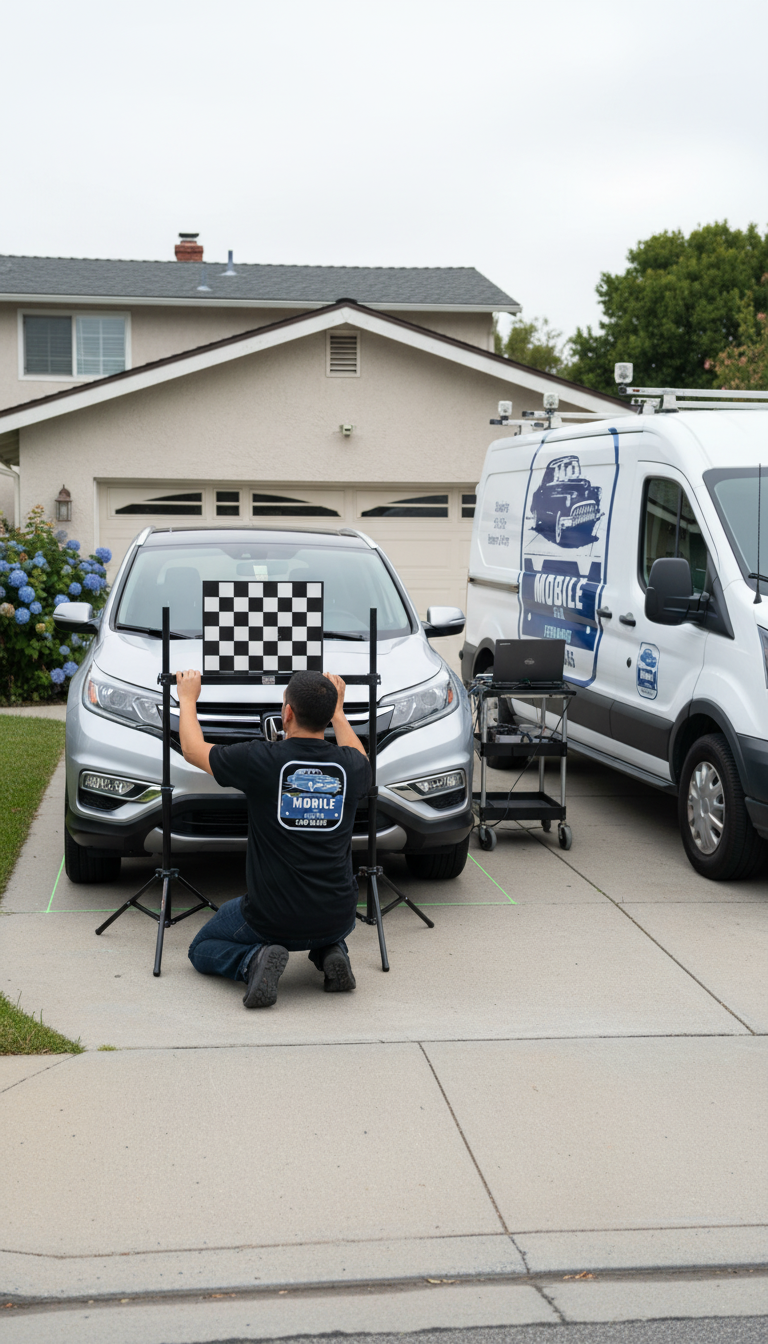
Static calibration uses calibration targets and controlled calibration conditions required by the OEM procedure to confirm sensor alignment.

Dynamic Calibration

Dynamic calibration follows OEM procedure validation, driving requirements when required for completion confirmation.

Vehicle Specific Method Selection

Procedure selection is based on manufacturer requirements and the systems requiring calibration, then verified by confirmation results recorded in the calibration report.

Coverage

Camera Calibration and Radar Calibration Coverage

ADAS calibration commonly involves camera calibration and radar calibration due to how driver assistance features rely on sensor alignment. Coverage focuses on calibrated components and documented confirmation.

Forward Facing Camera Calibration

Forward facing camera calibration supports features such as lane keeping assist, lane departure warning, and forward collision warning when equipped.

Radar Calibration

Radar calibration supports features such as adaptive cruise control and automatic emergency braking when equipped.

Additional Sensors When Equipped

Some vehicles require calibration for systems such as surround view camera systems, ultrasonic parking sensors, or lidar sensors when equipped.

Prerequisites

Prerequisites Verified Before ADAS Calibration Begins

Prerequisite verification supports calibration accuracy and reduces repeat calibration risk. Verification focuses on vehicle geometry, sensor readiness, and electrical stability required by OEM procedure.

Alignment and Geometry Verification

Wheel alignment verification status and ride height consistency are reviewed because vehicle geometry affects sensor reference points.

Sensor Readiness Checks

Steering angle sensor readiness and yaw rate sensor readiness are verified when required by the calibration procedure.

Electrical Stability

Battery voltage stability is checked because unstable voltage can affect scan and calibration confirmation.

Documentation

Reports Provided After ADAS Calibration

Documentation provides proof of results and a record of completion status. Reports also capture the DTC diagnostic trouble codes status before and after verification.

01

Diagnostic Scan and DTC Record

A diagnostic scan records system status and DTC results at intake and after verification.

02

Pre Scan Report

Pre scan report captures initial system status and records DTC findings before calibration begins.

03

Post Scan Report

Post scan report captures final system status after calibration verification is completed.

04

Calibration Report Confirmation

Calibration report confirms completion status for calibrated systems, such as forward facing camera calibration or radar calibration when applicable.

When It’s Needed

When ADAS Calibration Is Required

ADAS calibration is commonly required after changes that affect sensor mounting, aiming references, or vehicle geometry. Trigger events are listed to match real customer search intent without expanding into other services.

Common Calibration Triggers

  • Windshield replacement
  • Collision repair
  • Sensor replacement
  • Wheel alignment changes
  • Suspension work that alters vehicle geometry
FAQs

FAQs About ADAS Calibration

The main difference between a diagnostic scan and calibration is function and purpose. A diagnostic scan reads system status and diagnostic trouble codes (DTCs). ADAS calibration restores sensor alignment to OEM specifications and verifies proper system operation after adjustment.

Static and dynamic calibration both apply, depending on vehicle requirements. Some vehicles require static calibration, some require dynamic calibration, and some require both. OEM procedures define the correct method and verification standards for each vehicle configuration.

ADAS calibration takes 30 to 120 minutes, depending on vehicle procedure requirements and the number of systems involved. Static calibration often requires more setup time than dynamic calibration. Scheduling confirms expected timing after identifying vehicle specific procedures.
Get In Touch

Schedule ADAS Calibration

Scheduling focuses on quick intake, correct procedure selection, and documented proof delivery. Appointment confirmation is based on vehicle information and calibration requirements.

Information needed for scheduling: Vehicle year, make, model, any warning light information, and recent work performed help confirm procedure requirements and calibration type.

Monday to Sunday 7 am - 9 pm

Call to schedule ADAS calibration or request an appointment for documented calibration results.

Call +1 (818) 305-6256